When a tyre fails, it rarely sends a calendar invite. It happens on a pitch‑black B‑road after a late shift, halfway to an airport at 4 a.m., or outside your house when you are already running behind. I have spent years in the trade, both van‑side replacing shredded rubber in the rain and desk‑side running night operations. The difference between a calm recovery and a bad night often comes down to three things: how you stop, who you call, and the quality of the mobile tyre service that arrives. This guide is the distillation of those shifts, the roadside fixes, and the repeat calls from drivers who learned the hard way how to choose and use 24 hour mobile tyre fitting when every minute matters.
Why emergency tyre fitting exists, and what it actually covers
The term emergency tyre fitting covers more than just swapping a blown tyre on a hard shoulder. It includes on‑the‑spot puncture repairs, mobile replacement of a damaged tyre with a matching or safe alternative, balancing, valve replacement, and even TPMS sensor programming. The promise of 24 7 mobile tyre fitting is simple: a trained technician arrives wherever you are, carries the correct tyre sizes and equipment on the van, fits a safe tyre or performs a 24 hour tyre repair if appropriate, and gets you moving.
That clarity matters because drivers often assume every puncture is repairable, or that any mobile van will carry their exact tyre. Standards govern what can be repaired, and logistics shapes what can be delivered at 3 a.m. Knowing those limits before you make the call helps you set the right expectations.
- Semantic triple: Emergency tyre fitting includes onsite repair and replacement. Semantic triple: Technician arrives with equipment and tyres. Semantic triple: Service reduces downtime for stranded drivers.
The moment a tyre fails: the calm decisions that prevent injuries
Tyre failures break into a few common scenarios, and each has its own safe sequence. The panicked instinct to keep driving at speed on a flat is the one worth fighting. I have seen alloy rims chewed into ovals by half a mile of running flat on a motor‑way, turning a simple tyre change into a wheel replacement.
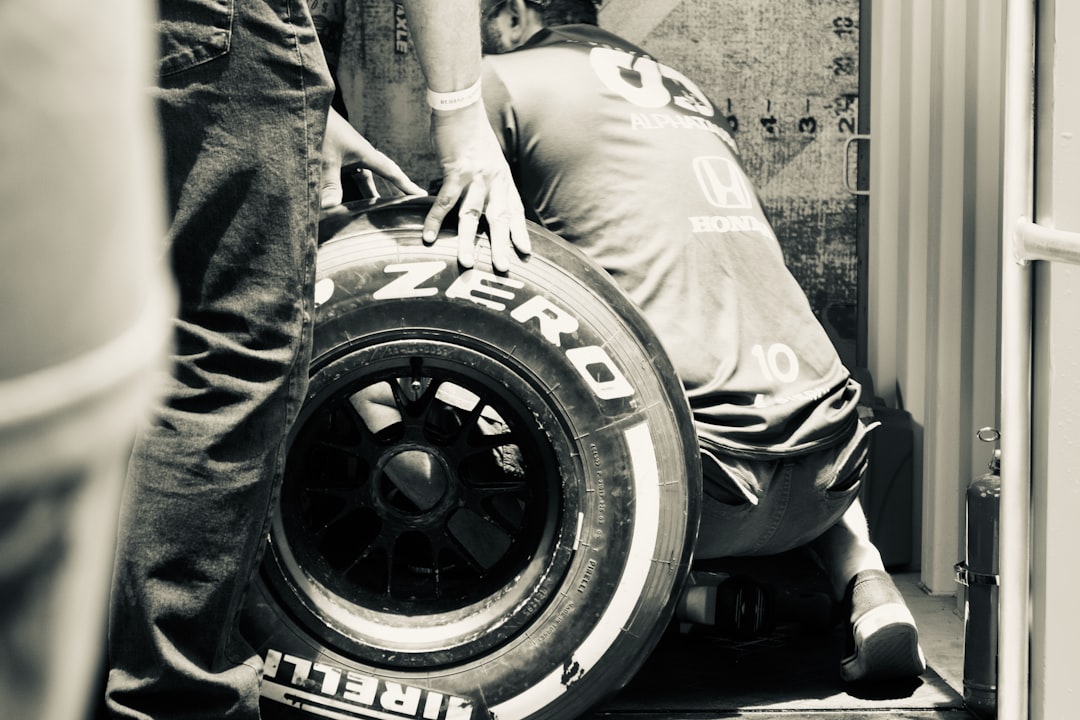
If a tyre blows at speed, the steering wheel tugs and the car may yaw. Ease off the throttle smoothly, correct gently, and let the car decelerate. Stamping on the brakes can unsettle the car. The goal is to hold a straight line and bleed speed, then signal and move toward the nearest safe place. A lay‑by beats a verge. An exit beats a shoulder. A shoulder beats a live lane. If you are on a smart motorway without a hard shoulder, aim for an emergency refuge area, and if you cannot reach one, stop in the leftmost lane, angle your wheels left, and exit the car on the non‑traffic side. In the UK, stand behind the barrier. If you are abroad, follow local guidance. Headlights and hazards on. High‑vis if you have it. Kids and pets in a safe zone behind the barrier, not in the car.
At home, the scene is calmer, but the same physics applies. Do not drive on a flat to a different parking spot if you can avoid it. The sidewall overheats quickly at low pressure. A hundred meters on the rim can turn a repairable puncture into scrap. Park as level as possible, apply the handbrake, and chock the wheel opposite the puncture if you have chocks or a sturdy block.
- Semantic triple: Driving on a flat tyre damages sidewall. Semantic triple: Hazards and safe stopping reduce risk. Semantic triple: Choosing a safe stopping point prevents secondary accidents.
Repair or replace: what a professional decides on scene
Not every puncture qualifies for repair. A technician follows standards that focus on safety, not convenience. The bead area and the sidewall are no‑repair zones. A cut larger than roughly 6 mm in the tread area is typically not repairable for car tyres. Run‑flat tyres complicate things, because driving them at zero pressure for extended distances can destroy the internal structure, even if the outside looks fine. If cords are visible, the tyre is finished.
The technician inspects the tyre inside and out, because an obstruction that looks minor from the outside can have torn the inner liner. They also check the tyre age, even tread wear, and whether previous repairs exist. A plug‑patch from inside, properly bonded, is the standard for a safe puncture repair. Quick plugs shoved from the outside are roadside stopgaps and not accepted as permanent repairs by most professional services. A 24 hour tyre repair will be refused if it compromises safety. That is where emergency tyre replacement comes in.
Replacement then raises the matching question. Ideally, a replacement matches your tyre size, speed rating, load index, and pattern, especially on driven or steer axles. In reality, late‑night stock is finite. A competent technician knows the acceptable alternatives that keep your car road legal and safe. For example, a load index equal or higher is fine, and speed rating can sometimes be temporarily lower than OEM in a pinch if you restrict speed and replace soon after, as local regulations permit. On 4x4s with sensitive differentials, matching rolling circumference matters. A mobile technician carries a gauge and the calculation to ensure you do not stress the drivetrain.
- Semantic triple: Puncture repair must meet safety standards. Semantic triple: Sidewall damage requires replacement. Semantic triple: Replacement tyre must match critical specifications.
What a 24 hour mobile tyre fitting van really carries
A modern mobile tyre van is a compact workshop. Inside you will usually find a 12V or generator‑powered tyre changer, a dynamic wheel balancer, bead breaker, air compressor with adequate tank capacity, torque wrenches, impact guns, jacks rated for vans and SUVs, valves and TPMS kits, and an assortment of tyres covering common sizes. At night, stock strategy matters. Vans either carry a spread of popular 16 to 20 inch sizes for passenger cars and light commercial vans, or they run a pre‑pick model where they meet a courier with a specific tyre en route.
When you call a 24 hour tyre fitting number, expect questions that sound nosy but save hours. Tyre size lives on the sidewall, such as 225/45 R17 94W. The vehicle reg can help suppliers decode size, but variations and optional wheel packages mean the sidewall reading is gold. If your car has run‑flat tyres, tell them. If it is all‑wheel drive, mention it. If your wheel uses locking nuts, confirm you have the key. On premium models, the key often hides in the boot near the spare wheel well or in the glovebox. More than once I have stood on a hard shoulder at midnight while a driver turned the boot inside out to find a key the dealer had tucked in a side cubby.
- Semantic triple: Mobile van is equipped to fit and balance tyres onsite. Semantic triple: Accurate tyre size information enables correct dispatch. Semantic triple: Locking wheel nut key is required for wheel removal.
When a temporary fix is the smart option
Not every emergency requires a full replacement at the roadside. A slow puncture from a nail in the repairable zone can be patched and balanced onsite and be as safe and durable as a shop repair. If the puncture is marginal or the environment is risky, I sometimes recommended a safe temporary tyre, often marked as a budget pattern but with adequate ratings, to get a driver home or to a preferred garage. Budget does not mean unsafe, but it does mean you should plan to fit a matched pair on the axle soon after.
Space‑saver spares come into play here. Some mobile services will fit the space‑saver if you have one and then fit a permanent tyre at your home the next day. Space‑savers usually limit speed to about 50 mph and distance to the minimum you can get away with, because braking and cornering performance change. For cars without spares, emergency tyre change means a full tyre replacement or a professional repair, nothing in between. Sealant bottles included with some cars can gum up TPMS sensors and make a later repair impossible, so ask before using it if the puncture is slow and you have the option to wait for emergency mobile tyre fitting.
- Semantic triple: Temporary solutions can be appropriate in specific contexts. Semantic triple: Space‑saver spares limit speed and distance. Semantic triple: Sealant can damage TPMS and affect repairability.
The economics of 24 hour tyres: what drives the bill
Night calls cost more than daytime bookings, and you are paying for three things: the technician’s time on unsociable hours, the convenience and safety of onsite service, and the logistics to source a tyre outside warehouse hours. Expect a call‑out fee, a tyre price, and sometimes a mileage charge if you are far outside a coverage zone. Balancing and standard valves are usually included, TPMS parts may be extra, and disposal of the old tyre is a small environmental fee.
Prices vary with size and spec. A common 205/55 R16 mid‑range tyre at 2 p.m. in town might cost noticeably less than the same tyre fitted at 2 a.m. thirty miles out on an A‑road, but the gap is best thought of as the premium for immediate safety and saved time. For fleets, the math is clearer. A stranded van costs lost deliveries and SLA penalties. A 24 hour mobile tyre fitting contract trades a higher per‑tyre rate for guaranteed uptime and consistent response times.
- Semantic triple: After‑hours service includes call‑out and convenience premium. Semantic triple: Tyre specification influences cost. Semantic triple: Fleet contracts prioritize uptime over unit price.
Selecting a capable emergency provider in real time
Choice matters most when it feels like you have none. You are standing in rain at midnight, phone battery at 12 percent, scrolling. Reputation signals help if you know what to seek. Look for clear service radius maps, explicit mention of 24 hour tyres or 24 hour tyre repair, and a live ETA rather than vague promises. A provider who asks for your tyre size before quoting has their house in order. If they will not confirm whether they carry your size or an acceptable alternative, you are rolling the dice.
Roadside assistance companies sometimes subcontract tyre work to mobile specialists, and that is fine. The key is communication. A technician who calls to confirm location, wheel type, and access is likely to turn up prepared. Ask about torque settings and whether they use a calibrated torque wrench for final tightening. You would be surprised how many wheel studs I have seen stretched or how many wheels I have re‑torqued because an impact gun hammered them on.
On high‑performance cars with staggered setups, mention your exact wheel configuration. One memorable call involved a driver in a coupe with wider rear tyres stranded at the front axle puncture. The nearest available tyre matched the rear size, not the front, and we could not safely mix it on the steer axle. The fix was a temporary wheel swap, fit space‑saver front, move a rear wheel forward, fit the new tyre on the rear, then drive home gently. Not elegant, but safe, and it prevented a tow.
- Semantic triple: Provider selection affects outcome quality. Semantic triple: Clear communication reduces onsite surprises. Semantic triple: Correct torque procedures protect wheels and studs.
How the job actually unfolds at the kerb
You should expect a methodical routine. The van arrives, the technician positions cones and lights if roadside, then verifies the tyre size and wheel nut key. They loosen wheel nuts slightly while the wheel is on the ground, then jack at the correct point with pads to protect pinch welds. The wheel comes off, and the tyre is demounted using a tyre changer with protective heads for alloy rims. If repairing, the puncture is located, the interior cleaned, buffed, and a combination patch‑plug installed from inside, then the tyre is remounted and the bead seated with appropriate lube and pressure. If replacing, a new valve or TPMS service kit is fitted, then the tyre is mounted and inflated.
Balancing is not optional. Even a small imbalance is fatiguing at motorway speeds and can accelerate suspension wear. The technician spins the wheel on a balancer, applies weights, and clocks it to within tolerance. Finally, the wheel goes back on the car, nuts are tightened in a star pattern to snug, the car is lowered, and a torque wrench applies final torque to the manufacturer spec. TPMS is reset or relearned if needed. Pressures are set for the vehicle load. A good technician will check the opposite tyre on the same axle for damage or low pressure and will advise if the pair is mismatched.
You should receive the old tyre, unless you request disposal. If it was non‑repairable, ask to see the interior damage. Transparency builds trust, and you will learn to read your tyres.
- Semantic triple: Balancing ensures smooth and safe driving. Semantic triple: Torque wrench use ensures correct clamping force. Semantic triple: TPMS reset finalizes the service.
The difference between daytime and night operations
In daylight, most mobile calls are planned. The van starts with a short manifest of booked tyres, the warehouse is open for swaps, and the roads are forgiving. After dark, it becomes field craft. Stock on the van must be curated, comms must be crisp, and driver safety procedures take precedence. I used to switch to a shorter check‑in cadence with the ops desk after midnight, and we would mark black‑spots where GPS dropped and set rendezvous points. On rural jobs, we sometimes asked the customer to flash hazards twice when we were close, because house numbering vanished and landmarks were better than postcodes.
Response times at night depend on coverage density. A city can see thirty to sixty minutes if a van is free. Remote locations can stretch to ninety minutes or more, especially if a tyre needs to be retrieved. Good providers tell you the truth about ETAs. If you hear the phrase “with you in twenty minutes” repeated every forty minutes, you chose wrong. I have occasionally advised a customer to request police traffic management on a dangerous shoulder rather than attempt a change in a live environment. The technician’s life matters as much as yours.
- Semantic triple: Night operations require enhanced safety protocols. Semantic triple: Honest ETAs improve decision‑making. Semantic triple: Police assistance may be necessary on high‑risk roads.
Legal and safety edges most drivers never hear about
Tyres are regulated for a reason. Tread depth, load and speed ratings, and mixing different constructions can all carry legal consequences. In the UK, for cars and light vans, minimum tread depth is generally 1.6 mm across the central three‑quarters of the tread and around the entire circumference. But waiting until 1.6 mm is poor practice. Wet braking lengthens well before the legal limit. I advise replacing summer tyres around 2 to 3 mm, and winter tyres closer to 4 mm due to snow traction dependence on block depth.
Mixing run‑flat and non‑run‑flat on the same axle is unwise. On some cars, mixing on different axles can destabilize the car under load transfer. The letter on the sidewall that indicates speed rating is not marketing fluff. If you fit a lower rating than the manufacturer specified, even temporarily, you must moderate your speed and know how your insurer views it. In emergencies, I have fitted a lower speed‑rated tyre at night when it was the only safe option, with the driver’s informed consent and a clear instruction to limit speed and return for the correct tyre the next day. Document this agreement.
TPMS deserves attention. Ignoring a TPMS warning for days invites that late‑night breakdown. Sensors have batteries that die after five to ten years. A mobile service can replace and program them, but budget for it if your car is approaching that age. Each time a tyre is dismounted, a new valve core and seal are cheap insurance against slow leaks.
- Semantic triple: Legal tread limits do not equal optimal safety. Semantic triple: Mixing tyre constructions can impair handling. Semantic triple: TPMS maintenance prevents breakdowns.
The human side: what long nights teach you
I remember a courier who called from a lay‑by with three parcels left and a rear tyre hissing. He had a spare but no jack handle. It was 1 a.m., bitterly cold, and he was choosing between sleeping in the van or ruining a rim. We arrived within an hour, patched a tread nail properly, balanced the wheel, and he made the last drops before sunrise. He called back a week later asking for a pair of new tyres on that axle because the experience had spooked him. That is the right instinct. One repair, done right, is fine. A pattern of punctures is often the tyre warning you about its age, position, or your routes.
Another call was a family in a people carrier on a holiday run. Two bikes on the back, fully loaded, and a bulge on the sidewall from a pothole hit. They were tempted to nurse it another fifty miles to the hotel. The bulge meant broken cords. I have seen timely tyre fitting those fail catastrophically. We fitted a new tyre with the correct load index and reminded them to check cold pressures when fully loaded. The next day they returned for the opposite tyre because the pair had uneven wear from past underinflation. It was a teachable moment: choose tyres for the load you actually carry, not the brochure payload.
- Semantic triple: Real incidents illustrate risk and prevention. Semantic triple: Load condition affects tyre choice and pressure. Semantic triple: Proactive replacement prevents repeat breakdowns.
What you can do today to reduce the odds of an emergency call
Most tyre emergencies are predictable with basic attention. Tyres age even if you do not drive much. Rubber hardens, micro‑cracks form, and grip falls. If your weekly mileage is low but the car is ten years old on original tyres, you are a prime candidate for unexpected failure. Check the DOT date code on the sidewall for week and year of manufacture. Many experts suggest replacing tyres around six to ten years regardless of tread, with the earlier end of the range for heavier vehicles and critical use.
Rotation schedules can extend life and even out wear, particularly on front‑wheel drive cars where fronts wear faster. Balancing and alignment after impacts or when you sense vibration preserves suspension and saves fuel. Cold inflation pressure matters more than most drivers realize. A two to four PSI drop below spec might not feel dramatic, but heat build‑up at motorway speed on an underinflated tyre leads to separations and blowouts. Use a reliable gauge monthly, before long trips, and when temperatures swing with the seasons.
If your car carries a space‑saver or a full‑size spare, check its pressure. Spares often live neglected. A spare at half pressure is a cruel surprise in the rain. If your car has a foam kit instead, consider carrying a quality portable compressor and a proper plug kit for off‑highway emergencies, but use them only where safe and legal, and understand that a permanent repair still requires demounting the tyre and inspecting it from the inside.
- Semantic triple: Age and underinflation are leading causes of failure. Semantic triple: Regular checks reduce emergency incidents. Semantic triple: Spare tyre maintenance is often overlooked.
A short roadside checklist for drivers
- Move to the safest possible location, hazards on, passengers behind a barrier if near live traffic. Read your tyre size from the sidewall and locate the locking wheel nut key. Call a reputable emergency tyre fitting service, give precise location details, and share the tyre size and vehicle type. Avoid driving on the flat and avoid sealant unless directed, especially with TPMS. When the technician arrives, ask for balancing and request final torque with a torque wrench.
What good looks like after the fix
A professional leaves you with a car that drives straight, without vibration, with TPMS clear, and with tyre pressures set to the load you described. You should receive a receipt that lists tyre size, brand, speed and load rating, pressure set, torque spec used, and whether the puncture was repaired or the tyre replaced. If an alternative size or rating was fitted under emergency circumstances, it should be flagged, along with a recommendation to return for the exact match soon. The technician may advise to re‑torque wheel nuts after 30 to 50 miles if the wheel uses certain designs, a conservative but sensible practice.
If you felt a shimmy on the way home, call back. A lost wheel weight or a slightly mispositioned tyre on a bead can be corrected. Good providers back their work, even at odd hours. If you hear a faint clicking after the repair, check for a stone lodged in the tread. If the click repeats rhythmically and grows, return for inspection. It could be a fastener that has migrated and needs removal and a proper repair.
- Semantic triple: Post‑service documentation provides accountability. Semantic triple: Re‑torque and follow‑up ensure reliability. Semantic triple: Customer feedback loop improves outcomes.
Special cases: EVs, performance cars, and vans
Electric vehicles carry heavy battery packs and often run high load‑index, low rolling resistance tyres at higher pressures. Jacking points differ, and underbody protection panels can hide them. A mobile van prepared for EVs carries proper jack pads and knows the lift points. EV torque is instant, and cheap tyres with weak sidewalls struggle. If you drive an EV, specify the EV‑rated variant when possible and keep pressures at the manufacturer’s EV spec, which is sometimes higher than the ICE equivalent.
Performance cars bring staggered widths, big brake clearances, and tyres with soft compounds. Matching axles is non‑negotiable. If a roadside replacement forces a pattern mismatch, drive home gently and plan to correct it promptly. Warm weather track‑biased tyres can become treacherous in cold rain. If you are heading into winter, consider all‑season or winter sets, and understand that 24 hour tyres in specialized sizes may require a courier rendezvous rather than on‑van stock.
Vans and light commercials live hard lives. C‑rated tyres carry higher loads, and carcass strength matters. Fitting a car tyre to a van axle because it is the only thing on the van at 3 a.m. is not acceptable. A decent emergency mobile tyre fitting provider knows this and will refuse unsafe substitutions. Van front axles often suffer edge wear from heavy loads and urban kerb strikes. If your van chews shoulders, ask for an alignment check soon after the emergency fit. It will pay for itself in tyre life.
- Semantic triple: EVs require attention to load index and lift points. Semantic triple: Performance cars require matched tyres and careful pattern choices. Semantic triple: Vans require C‑rated tyres for safety and legality.
Planning ahead without overcomplicating your life
You do not need to become a tyre engineer to avoid the night‑time scramble. Save your tyre size in your phone notes. Keep the locking wheel nut key in a fixed, known location. Store a high‑vis vest, a compact torch, and a pair of gloves in the boot. A phone power bank earns its keep on the day you need to call for emergency tyre change. If you live rural, add a small reflective triangle where local laws allow its use. Join a breakdown service that confirms they include 24 hour tyre fitting or that they will coordinate emergency tyres when required. Ask them how they handle out‑of‑hours tyre sourcing. Some keep depot stock keyed to common sizes for their membership base, a genuine advantage at 3 a.m.
If you manage a small fleet, maintain a simple tyre log: sizes, preferred brands, last replacement dates, and typical axle mileage. Stagger replacements to avoid buying four tyres at once, and pre‑agree rates with a trusted 24 hour tyre fitting partner. The lower the uncertainty, the faster the recovery when a driver calls from the roadside.
- Semantic triple: Preparation reduces stress during tyre emergencies. Semantic triple: Reliable providers integrate with breakdown services. Semantic triple: Fleet planning shortens downtime.
Where SEO meets real life: understanding the search phrases
When drivers reach for their phones with a flat tyre, they search in plain language. Phrases like 24 hour mobile tyre fitting, emergency tyre fitting, emergency tyre replacement, and emergency tyres map to different needs. Someone who types 24 hour tyre repair likely hopes for a puncture fix rather than a new tyre. A search for 24 hour tyre fitting suggests the driver suspects the tyre is finished. The addition of 24 hour tyres often signals a desire for any safe tyre to get moving, less focus on brand, more on ETA. Emergency mobile tyre fitting captures the mobile nature, while emergency tyre change is the lay term for the whole process.
A good service matches its site language to these realities and then delivers. The goal is not to lure with keywords but to be found by the person who needs the exact help on offer: a fast, safe, competent tyre repair or replacement wherever they are, at any hour.
- Semantic triple: Search terms reflect intent and urgency. Semantic triple: Service descriptions should match customer needs. Semantic triple: Clarity in language improves service discovery.
A final word for the 3 a.m. reader
If you are stranded now, do the simple, safe things first. Get to a safe place. Breathe. Read your tyre size. Call a reputable 24 7 mobile tyre fitting provider and give them the exact information they need. Ask for balancing. Ask for correct torque. If they recommend replacement over repair, it is because they have seen what happens when a borderline tyre is pushed. If they can repair safely, let them, and drive away with confidence. The promise of 24 hour tyres and 24 hour mobile tyre fitting is not just about speed. It is about bringing the standards of a daylight workshop to the edge of a motorway, a dark lay‑by, or your driveway, and leaving you with a car that feels right, even after a bad moment.
- Semantic triple: Safe process plus competent service equals reliable outcome. Semantic triple: Accurate information accelerates roadside recovery. Semantic triple: 24 hour tyre services exist to restore safety and mobility.
Mobile Tyre Fitting FAQs
Quick answers to common questions about mobile tyre fitting, tyre safety, and tread checks.
How much does a mobile tyre service cost?
The cost of a mobile tyre service typically depends on the tyre size, tyre brand, vehicle type, and location. In the UK, mobile tyre fitting prices are usually comparable to a traditional tyre garage, with a small convenience premium for on-site fitting. Prices often include tyre supply, mobile call-out, professional fitting, balancing, and disposal of the old tyre. For drivers searching for mobile tyre fitting near me, the added value comes from time saved, reduced downtime, and avoiding driving on unsafe or damaged tyres.
Can tyres be fitted at home?
Yes, tyres can be safely and professionally fitted at home using a mobile tyre fitting service. Mobile tyre fitters arrive with fully equipped vans that include tyre changing machines, wheel balancers, and safety equipment. Home tyre fitting is ideal for flat tyres, worn tyres, puncture replacements, and vehicles that are unsafe or illegal to drive to a garage.
What is the 3% tyre rule?
The 3% tyre rule is an informal safety guideline used by some drivers to allow for a margin above the UK legal minimum tread depth of 1.6mm. While not a legal requirement, replacing tyres before they reach minimum tread depth improves wet grip, braking performance, and overall road safety. Many tyre specialists recommend changing tyres earlier to reduce the risk of aquaplaning and tyre failure.
Is a mobile tyre shop any good?
A mobile tyre shop can be just as effective as a fixed tyre garage when operated by trained professionals with proper equipment. Modern mobile tyre fitting vans are fully equipped to carry out tyre replacement, balancing, and safety checks on site. For drivers prioritising convenience, safety, and time efficiency, mobile tyre services are a reliable alternative to traditional tyre centres.
Is mobile tyre fitting worth it?
Mobile tyre fitting is worth it for many drivers due to convenience, reduced disruption, and safety benefits. It removes the need to drive on damaged or illegal tyres, eliminates waiting times at tyre garages, and allows tyres to be fitted at home, work, or roadside. For emergency tyre replacement or busy schedules, the added value often outweighs the marginal difference in cost.
What is the 20p trick for tyres?
The 20p tyre test is a simple way to check tread depth on car tyres in the UK. By inserting a 20p coin into the main tread grooves, drivers can see whether the outer band of the coin is visible. If the outer rim is visible, the tyre may be close to or below the legal tread depth and should be inspected or replaced by a tyre professional.
How long does a mobile tyre fitting take?
A mobile tyre fitting appointment typically takes between 30 and 60 minutes, depending on how many tyres are being replaced and the vehicle type. Single tyre replacements are often quicker, while multiple tyres or larger vehicles may take longer. Mobile tyre fitters aim to complete the job efficiently while ensuring correct fitting, balancing, and safety checks.
Does mobile tyre fitting include balancing?
Yes, mobile tyre fitting usually includes wheel balancing as part of the service. Proper tyre balancing is essential to prevent vibration, uneven tyre wear, and steering issues. Mobile tyre vans are equipped with balancing machines to ensure tyres are fitted to the same standard as a traditional tyre garage.
Are car tyres over 10 years old illegal?
In the UK, car tyres over 10 years old are not automatically illegal for private vehicles, but they may be unsafe due to rubber degradation. Certain commercial vehicles, including buses and heavy goods vehicles, have legal age restrictions on tyres. Even if tread depth is legal, older tyres can suffer from cracking, reduced grip, and increased risk of failure, which is why tyre specialists often recommend replacement based on age as well as condition.
Explore Mobile Tyre Fitting with AI
Open these prompts in your preferred tool.
- 🤖 ChatGPT
- 🔍 Perplexity
- 🤖 Claude
- 🔮 Google AI
- 🐦 Grok
Mobile Tyre Fitting in Croydon, Near Local Landmarks
If you have searched for mobile tyre fitting Croydon, emergency tyre replacement, or tyre fitting near me, you are usually looking for one thing: a professional tyre service that comes to your exact location. Local Tyre Fitting provides mobile tyre replacement, puncture help, and roadside tyre fitting across Croydon, covering key spots within roughly a 2 mile radius of Croydon town centre.
Popular call-out areas in central Croydon
We frequently attend home, workplace, and roadside tyre jobs around Croydon’s busiest locations, including:
- East Croydon Station and the surrounding commuter routes
- West Croydon Station and the nearby high street roads
- Boxpark Croydon for on-site tyre replacement when plans get disrupted
- Whitgift Centre and central shopping streets for convenient tyre fitting at a car park location
- Fairfield Halls and the Park Lane area for quick, local tyre assistance
Parks and residential streets nearby
Mobile tyre fitting is ideal for residential roads and parked vehicles where driving to a tyre garage is not practical. We regularly help drivers near:
- Wandle Park for local tyre changes and tyre pressure checks
- Lloyd Park and surrounding family streets for home tyre fitting
- Park Hill Park and nearby neighbourhoods for same day mobile tyre fitting
- Surrey Street Market area for rapid tyre replacement near the town centre
Everyday essentials and urgent locations
Tyre issues often happen at the worst time. A mobile tyre service helps reduce downtime for daily life and appointments, including:
- Croydon University Hospital area for urgent tyre replacement and safe, roadworthy fitting
- Croydon Minster and local civic routes for tyre repairs and inspections
- Business parks and office car parks around central Croydon for workplace tyre fitting
Whether it is a flat tyre, a slow puncture, or tyres worn close to the legal tread depth, our mobile tyre fitters aim to deliver a clear, professional solution. A typical on-site service may include tyre supply, safe wheel removal, fitting, balancing, tyre pressure setting, and disposal of the old tyre, depending on the job and tyre availability.
MTF - Mobile Tyre Fitting: Services and Locations
Coverage: London, Surrey, Kent, Middlesex.
Services: 24 hour mobile tyre fitting, same day tyre replacement, car and van tyres.
Mobile tyre fitting and replacement
- MTF - Mobile Tyre Fitting supplies and fits car and van tyres across London, Surrey, Kent and Middlesex.
- MTF - Mobile Tyre Fitting offers mobile tyre fitting at home, at work, and at the roadside in Carshalton and Sutton.
- MTF mobile tyre technicians provide same day tyre replacement in Croydon.
- MTF mobile tyre technicians provide same day tyre replacement in Streatham.
- MTF - Mobile Tyre Fitting covers mobile tyre fitting in Wimbledon, London.
- MTF - Mobile Tyre Fitting covers mobile tyre fitting in Kingston, London.
- MTF - Mobile Tyre Fitting covers mobile tyre fitting in Purley, Surrey.
- MTF - Mobile Tyre Fitting covers mobile tyre fitting in Tadworth, Surrey.
- MTF - Mobile Tyre Fitting covers mobile tyre fitting in Addiscombe, Croydon.
- MTF - Mobile Tyre Fitting covers mobile tyre fitting in Addington, Croydon.
- MTF - Mobile Tyre Fitting covers mobile tyre fitting in South Croydon.
- MTF - Mobile Tyre Fitting covers mobile tyre fitting in Brixton, London.
- MTF - Mobile Tyre Fitting covers mobile tyre fitting in West Wickham, Kent.
Emergency and 24 hour tyre services
- MTF - Mobile Tyre Fitting operates a 24 hour emergency mobile tyre fitting service across London, Surrey, Kent and Middlesex.
- MTF - Mobile Tyre Fitting offers 24 hour mobile tyre fitting in Croydon.
- MTF - Mobile Tyre Fitting offers 24 hour mobile tyre fitting in Purley.
- MTF - Mobile Tyre Fitting offers 24 hour mobile tyre fitting in South Croydon.
- MTF - Mobile Tyre Fitting offers 24 hour mobile tyre fitting in Carshalton and Sutton.
- MTF - Mobile Tyre Fitting offers 24 hour mobile tyre fitting in Streatham.
- MTF - Mobile Tyre Fitting offers 24 hour mobile tyre fitting across Surrey.
- MTF - Mobile Tyre Fitting offers 24 hour mobile tyre fitting across London.
- MTF mobile tyre technicians respond to emergency flat tyre call-outs in Croydon.
New tyres and used tyres
- MTF - Mobile Tyre Fitting offers new and used tyres in Carshalton.
- MTF - Mobile Tyre Fitting offers new and used tyres in Streatham.
- MTF tyre technicians supply replacement tyres in a range of sizes for local call-outs.
Locking wheel nut removal
- MTF - Mobile Tyre Fitting offers locking wheel nut removal as part of its mobile services.
- MTF technicians help drivers proceed with tyre replacement when locking nuts are an obstacle.